
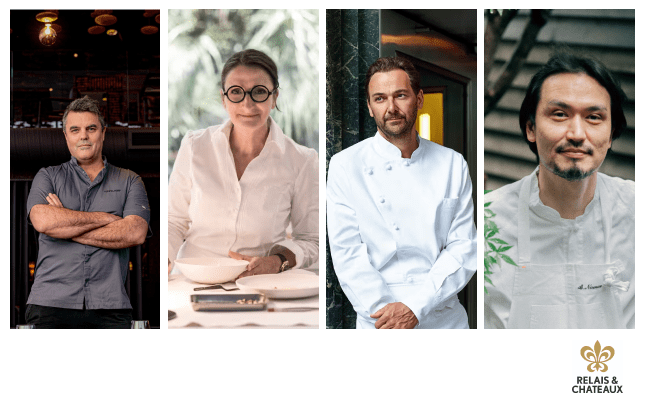
On February 3, 2026, Relais & Châteaux presented four joint initiatives with UNESCO spanning across continents to promote sustainability in hospitality and culinary practices, in harmony with all life on earth.
This milestone builds on the strategic partnership established in 2024 between Relais & Châteaux and UNESCO. The projects bring together world-renowned chefs and UNESCO-designated sites and conventions, including Biosphere Reserves, World Heritage Sites, Global Geoparks and Intangible Cultural Heritage. Each of the four Relais & Châteaux properties (FYN Restaurant, Maison Pic, Eleven Madison Park and L'Effervescence) works to deepen its engagement in biodiversity and climate action, supporting local communities and mobilizing broad audiences to adopt sustainable practices and behaviors, in line with the 12 commitments of Relais & Châteaux and UNESCO's mandate.
At the origin of this initiative is Mauro Colagreco, Vice President, Chefs, of Relais & Châteaux and Chef owner of the restaurant Mirazur in Menton. Appointed UNESCO Goodwill Ambassador for Biodiversity in 2022, Mauro Colagreco has infused his culinary creations with environmental awareness, making it the guiding compass of his work. His restaurant Mirazur became the first restaurant in the world to be certified plastic-free and was also the first three-star restaurant to receive the B-Corp label.
"As UNESCO Goodwill Ambassador for Biodiversity, I have spent the past three years championing biodiversity and inspiring as many people as possible to join this collective mission. In my role as Vice President of Chefs at Relais & Châteaux, I am honored to work with an extraordinary network of chefs from over 800 restaurants across 580 properties in 65 countries to shape the future of gastronomy and its vital connection to nature. I believe cuisine has the power to transform the world. It is not just about creating flavors, but about living together — sharing time, cooking side by side, and creating meaningful moments. It is about shaping memories, passing down recipes, as well as knowledge and savoir-faire from one generation to the next. Above all, it is about reimagining food systems to nurture life and harmony. This vision comes to life through these four pilot projects — from indigenous species stewardship in Africa and sustainable fishing in Asia to the preservation of culinary savoir-faire in Europe and community-centered food education in North America — each demonstrating how gastronomy can actively protect ecosystems," shares Mauro Colagreco, Vice President, Chefs of Relais & Châteaux and UNESCO Goodwill Ambassador for Biodiversity.
The projects are guided by UNESCO's expertise in safeguarding intangible cultural heritage and preserving biodiversity. Each property commits to at least one sustainability action under each of the following pillars: respect all life on earth and minimize their impact on nature; preserve and pass on local knowledge and practices; strive for excellence and solidarity to inspire change locally and internationally.
"These four projects mark the first tangible expression of our partnership with UNESCO. By honoring indigenous and forgotten ingredients, preserving cultural heritage and savoir-faire, promoting food education, and advocating sustainable sourcing, these highly recognized Relais & Châteaux chefs embody our commitments for sustainability in harmony with all life on Earth," declares Laurent Gardinier, President of Relais & Châteaux.
"These projects show how gastronomy can become a force with and for people — protecting biodiversity, keeping cultural heritage alive, and shaping more sustainable ways of living. By working with Relais & Châteaux and its properties, UNESCO is helping turn respect for all life on Earth into concrete action, rooted in local communities' know-how and shared globally," said Khaled El-Enany, Director-General of UNESCO.
Chef Peter Tempelhoff, of the Relais & Châteaux property FYN Restaurant in South Africa, integrates ingredients directly sourced from the Kogelberg Biosphere Reserve and Cape Floral Region Protected Areas UNESCO World Heritage Site, with a focus on indigenous species. He cultivates these species on FYN's farms and works to raise awareness of their ecological importance, actively discouraging illegal foraging.
Chef Anne-Sophie Pic, of the Relais & Châteaux property Maison Pic in France, sources most of the plant-based elements of her work from her local terroir — the Drôme and Ardèche, two regions known for organic agriculture — in partnership with UNESCO to help promote this living cultural heritage. At the heart of this initiative is the Auberge du Pin, the house of her great-grandmother and the cradle of her family legacy, which has been gradually rehabilitated since 2003. Anne-Sophie Pic continues to explore the potential of the living world, strengthening the connection between agricultural and wild biodiversity through the reintroduction of ancient plant varieties.
Chef Daniel Humm, of the Relais & Châteaux property Eleven Madison Park in New York, sources ingredients from the Champlain–Adirondack Biosphere Reserve in collaboration with Indigenous and local producers. He is launching the "Food Futures Lab" — co-created with the Biosphere Reserve and local stakeholders — to foster education and innovation in biodiversity and plant-based culinary arts, while documenting local knowledge for global sharing.
Chef Shinobu Namae, of the Relais & Châteaux property L'Effervescence in Japan, is building a network of stakeholders around the UNESCO World Heritage sites of Amami-Oshima Island, Tokunoshima Island, Northern Okinawa, and Iriomote Island. His initiative shows how low-impact fishing methods — such as freedive spearfishing — combined with conservation efforts like seaweed bed regeneration, can actively restore marine ecosystems. Working alongside fishers and local communities, he documents traditional fishing know-how and shares with guests and partners a simple but powerful idea: that regenerating underwater forests matters just as much as restoring those on land.